
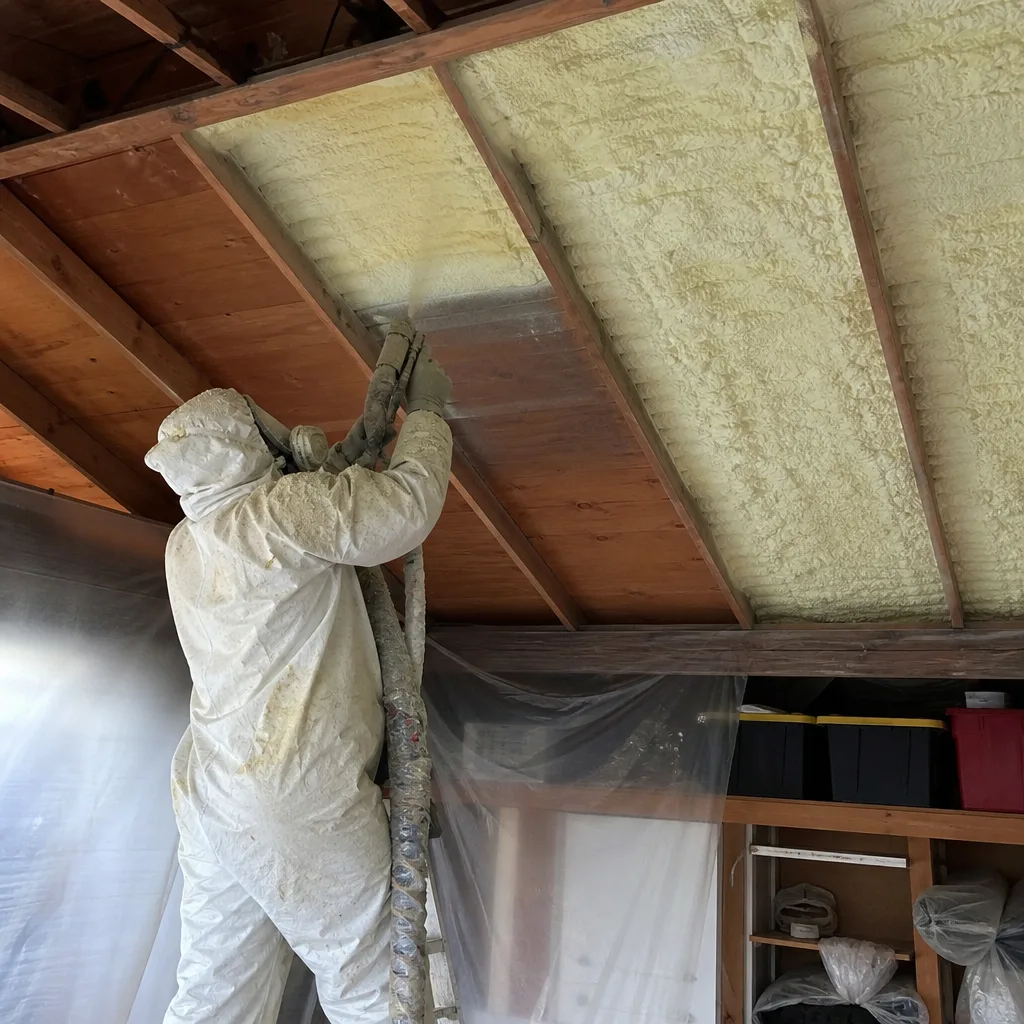
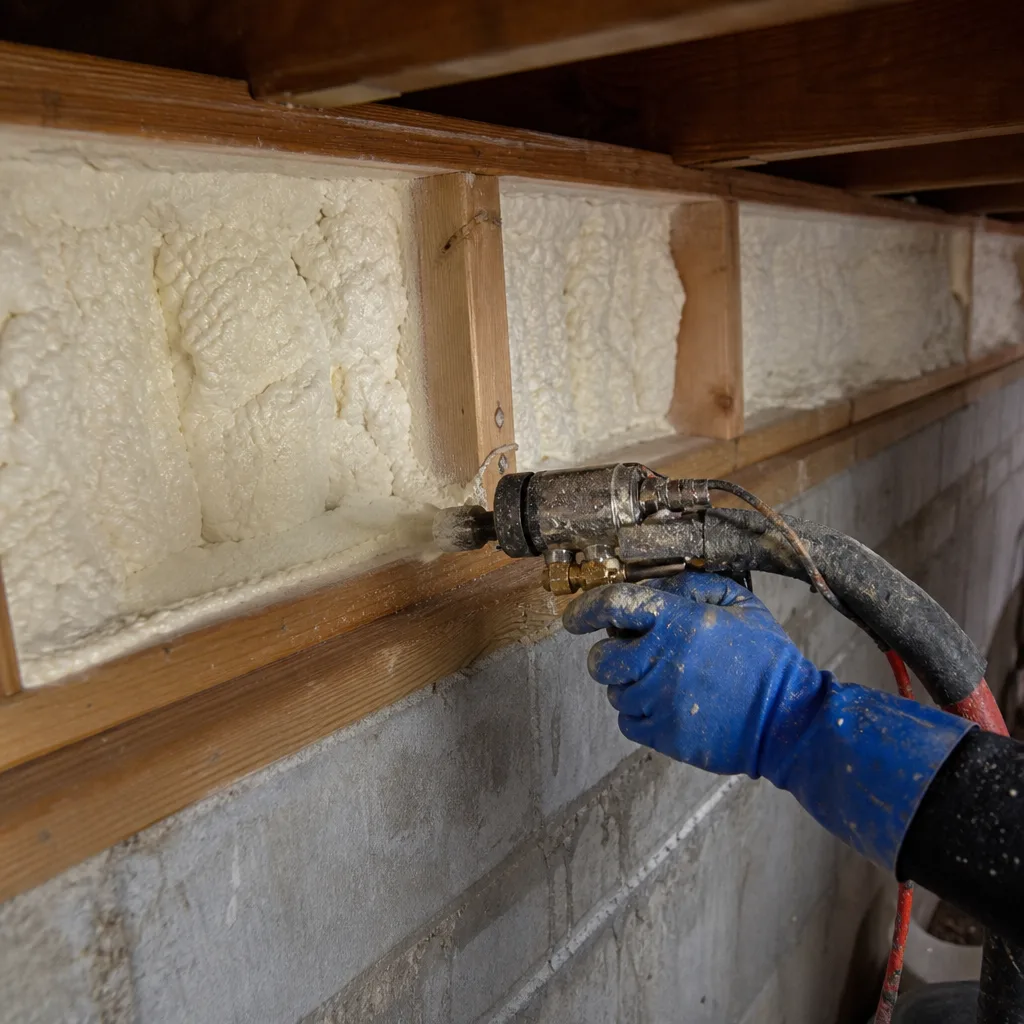
Trusted Spray Foam Insulation for El Monte Homeowners
If you’re wondering how much Spray Foam Insulation costs in El Monte, it typically runs between $2.50 and $7.00 per board foot installed, with most whole-attic projects landing in the $4,800 to $9,500 range depending on foam type, square footage, and how much prep work your attic needs first. We complete most residential spray foam jobs in one to two days, and Ruben Castillo, the owner of Pacific Insulation El Monte, is the person on the ladder running the spray gun, not a crew lead you’ve never met. Call (626) 254-6177 for a straight answer about what your El Monte home actually needs.
What makes spray foam different from the fiberglass batts stuffed in most El Monte attics is simple: foam seals. It expands into gaps, blocks air movement, and creates a thermal barrier that fiberglass simply can’t match when it’s compressed, dusty, or chewed through by rodents. Homes in this part of the San Gabriel Valley fight real heat, summer after summer, and a sealed attic changes how your air conditioner works from July through October. That’s the job: stop treating your ceiling as a heat radiator and make the whole envelope work like one system.
We’ve crawled through attics in El Monte, South El Monte, Rosemead, and Temple City where homeowners were told they needed new insulation when what they actually needed was air sealing first. That’s why every spray foam project we quote starts with a look at the whole attic, not just a square-footage estimate over the phone. The diagnosis comes before the foam, and the owner does both.
What Our Spray Foam Insulation Service Includes
Spray foam isn’t one product. It’s a category with different densities, expansion rates, and best-use cases. We carry both open-cell and closed-cell formulations from Demilec and Icynene, and the choice between them depends on your roof style, your moisture exposure, your budget, and how you use the space. Here’s what each application actually involves.
Open-Cell Spray Foam
Open-cell foam is the lighter, more breathable option. It expands aggressively, which makes it ideal for filling irregular cavities, odd angles, and hard-to-reach areas in older El Monte attics. At roughly R-3.5 to R-3.8 per inch, open-cell delivers solid thermal performance while also doing something fiberglass never does: it stops air movement through the material itself. We recommend open-cell for attic ceilings and interior wall cavities where the main goal is thermal comfort and some sound dampening. Ruben installs it himself, and because it’s water-vapor permeable, it won’t trap moisture the way a misapplied closed-cell application can in certain roof assemblies.
Closed-Cell Spray Foam
Closed-cell foam is the denser, higher-performing option. At roughly R-6.5 to R-7 per inch, it delivers nearly double the R-value of open-cell in the same space, and it acts as a Class II vapor retarder once cured. In El Monte, where summer humidity pushes through stucco walls and roof decks, closed-cell is often the right call for rim joists, crawl space lids, and areas prone to condensation. It also adds structural rigidity to wall and roof assemblies. We use Demilec’s closed-cell formulations regularly because they cure reliably in the temperature swings we get between night and midday here in the Valley.
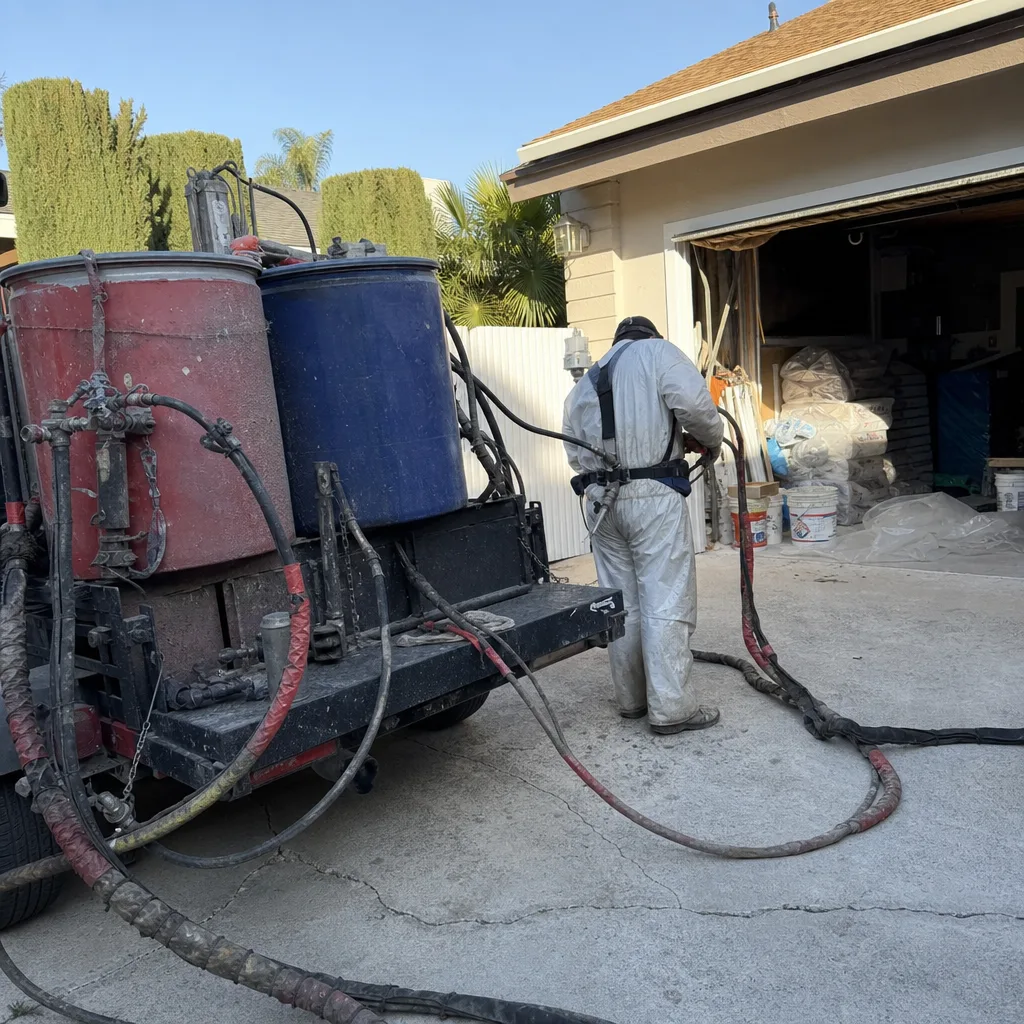
Rim Joist Spray Foam
Your rim joist is the band of wood where your floor framing meets your foundation wall, and it’s one of the most consistently leaky spots in any El Monte home with a raised foundation. Air moves through rim joists year-round, pulling dusty crawl space air into the house in summer and letting heated air escape in winter. A proper rim joist spray foam job seals that entire perimeter band, cutting that air pathway and reducing the stack effect that makes your crawl space feel like it’s connected to your living room. We do this job frequently as part of a larger crawl space encapsulation package, but it stands alone too when that’s the only gap that matters.
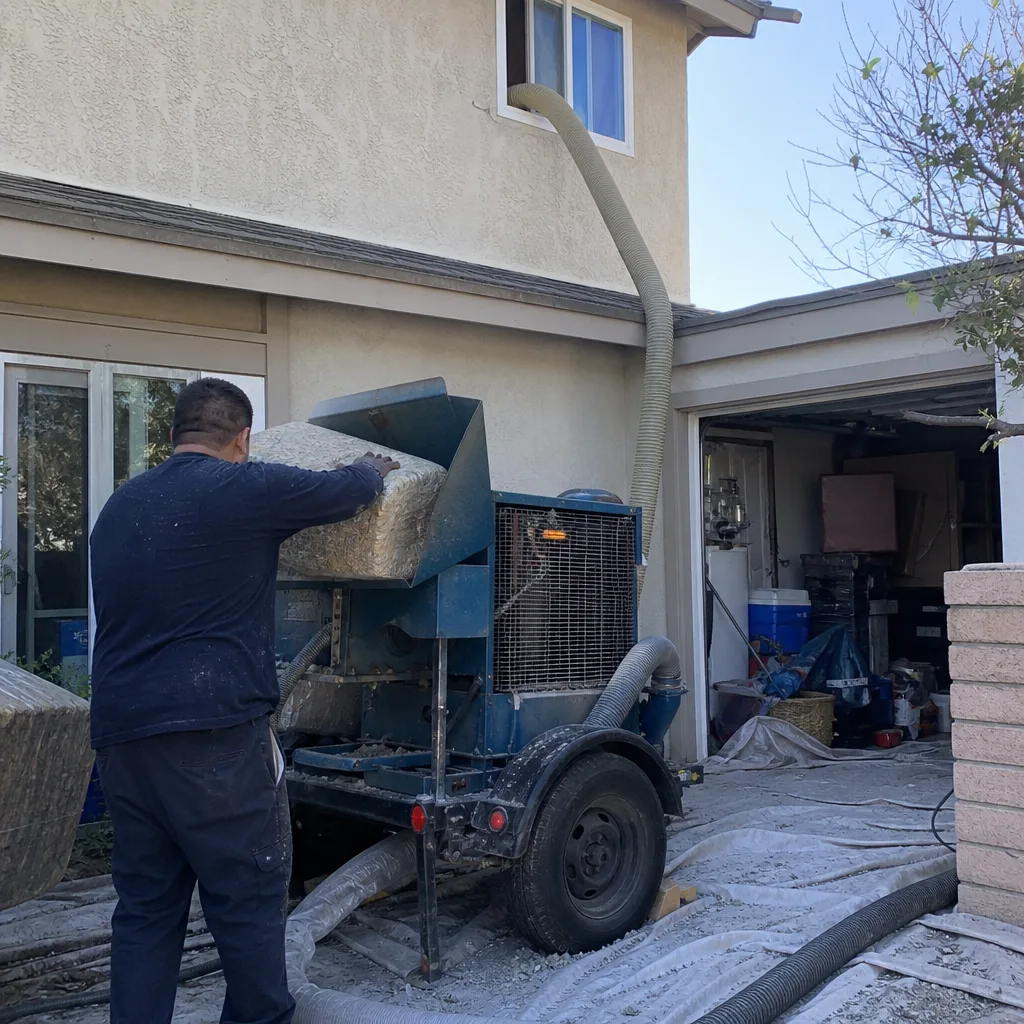
Garage Ceiling Spray Foam
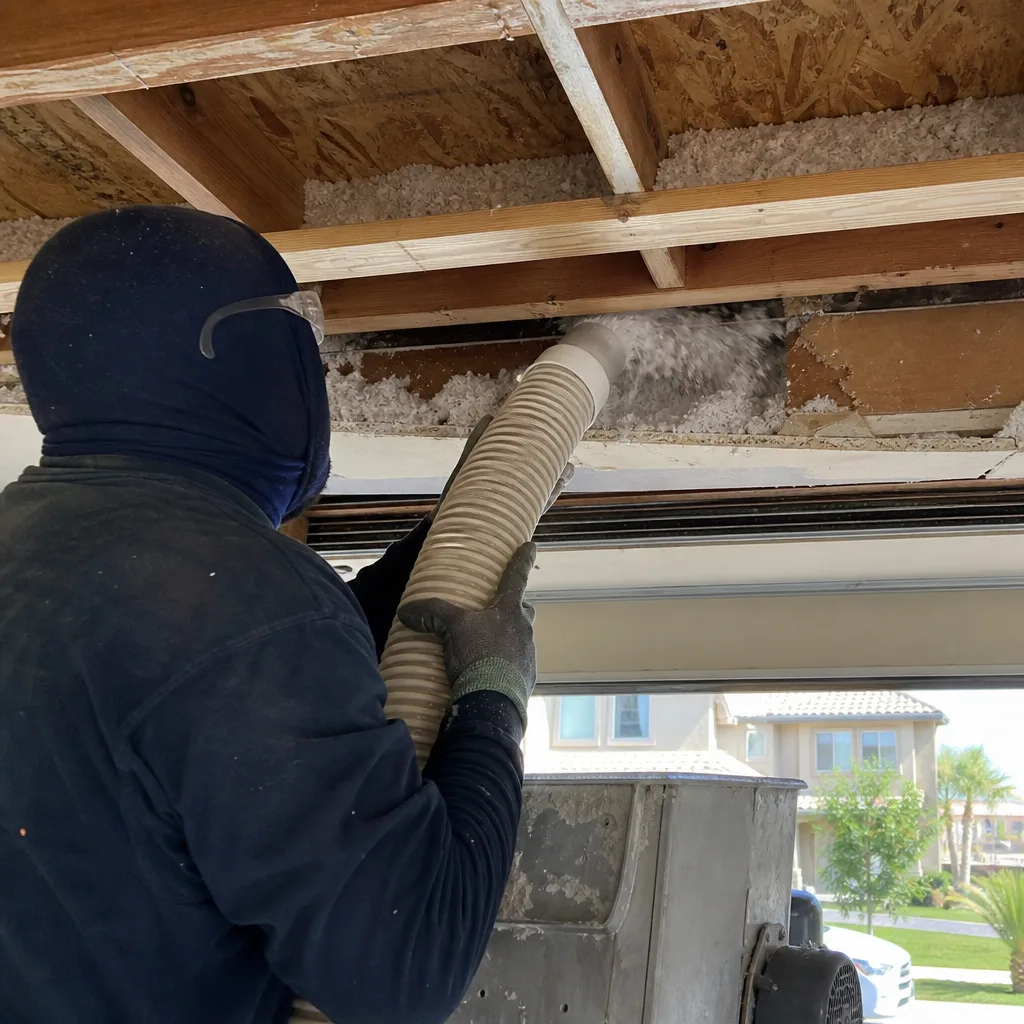
If you have an attached garage, its ceiling is probably the single largest uninsulated surface connected to your living space. Most El Monte homes built before 1990 have nothing between the garage and whatever room sits above it. Spraying closed-cell foam on the garage ceiling creates a thermal and air barrier that keeps exhaust fumes from migrating upward and keeps summer heat from turning the room above into an oven. We see this make an immediate difference for homes where a bedroom sits over the garage and the AC has always struggled to keep up.
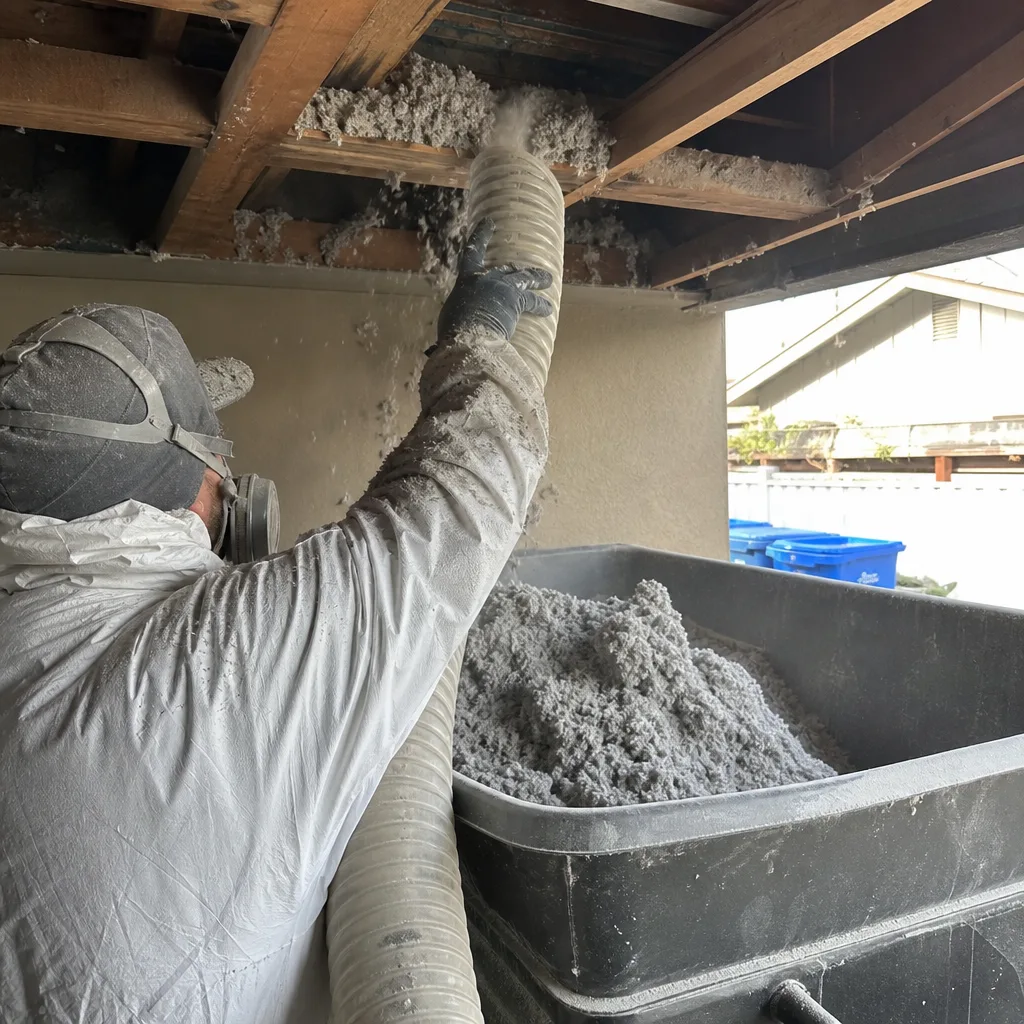
Spray Foam Roof Deck
For homes with unvented attics, cathedral ceilings, or flat/low-slope roof lines common in older El Monte construction, spraying the roof deck itself transforms the attic from an unconditioned buffer zone into a conditioned space. This is a bigger project with big energy-reduction potential, but it requires correct foam selection and careful attention to moisture management. Closed-cell is almost always the product for roof deck applications, and the thickness matters: too thin and you risk condensation on the underside of the roof sheathing. We measure, calculate, and apply the foam at the correct depth for our climate zone, not a one-size-fits-all number.
What happens when you call
- 1
A real person answersNo phone trees — you reach a local pro.
- 2
You get an upfront price rangeHonest numbers before anyone is dispatched.
- 3
A background-checked tech heads outLicensed & insured, dispatched right away.
- 4
You approve before work beginsNothing starts until you say go.
Brands We Service for Spray Foam Insulation
We don’t lock ourselves into one manufacturer’s product line, because no single foam brand is right for every house. Demilec is our workhorse for closed-cell applications. Their Heatlok HFO line uses a low-GWP blowing agent, which means better environmental performance without sacrificing R-value or adhesion. In El Monte’s summer heat, consistent adhesion to roof sheathing and framing matters, and the Demilec products we spray cure predictably even when attic temperatures climb into the triple digits before we start.
Icynene is where we go for open-cell projects that need maximum expansion and air-sealing performance. Icynene’s open-cell formulations fill cavities fully, including the awkward gaps around electrical boxes, plumbing penetrations, and framing transitions that batt insulation just drapes over. We’ve seen Icynene solve comfort problems in homes where fiberglass had been “topped off” twice and the homeowner was still hot. Sometimes the material isn’t the problem: the air movement is. Icynene stops both.
Whether your project calls for Demilec, Icynene, or another match from our eight-brand material library including Owens Corning and Johns Manville products for hybrid approaches, we’ll recommend a product based on your home’s specific conditions. The material follows the diagnosis, not the other way around.
Signs You Need Spray Foam Insulation Right Now
- Your upstairs rooms run 8–12 degrees hotter than downstairs. This is the classic signature of an under-insulated, unsealed attic in El Monte. When the space between your ceiling and roof is holding heat, that heat radiates downward all evening. Spray foam on the attic floor or roof deck attacks the problem at the source instead of asking your AC to fight a losing battle.
- You can feel air moving around outlets and light fixtures on exterior walls. Air leaks through wall cavities make your insulation almost pointless. If the wall is leaky, the heat or cold just routes around the insulation. Closed-cell spray foam in the wall cavity seals the path while insulating it.
- Your energy bills spike every summer and don’t come back down. When insulation is compressed, settled, or missing, your HVAC system runs longer to hold the same temperature. This is especially true in El Monte, where summer highs routinely exceed 90 degrees. A sealed, foamed attic can cut those runtimes significantly.
- You hear rodents or birds in the attic, and there’s old insulation up there. Rodents nest in fiberglass and leave behind waste, odor, and chewed wiring. We handle rodent proofing and attic cleaning in-house before any new foam goes in, so you’re not just insulating over the problem. The same crew that cleans is the crew that foams.
- Rooms near the garage or crawl space always smell musty or feel humid. That’s air moving from unconditioned spaces into your home. Foaming the rim joists, garage ceiling, or crawl space lid stops that transfer and often resolves condensation problems that paint and drywall repairs never fix.
Our Spray Foam Insulation Process — Step by Step
- 1
We start with a home energy audit. Before any foam is mixed, we walk the entire property and look at the attic, walls, crawl space, and existing insulation. We check for air leaks, moisture problems, rodent activity, and ventilation issues. You get a clear picture of what’s actually wrong before anyone pitches you a product. The audit is available as a starting service on its own, and most El Monte homeowners tell us it’s the first time anyone explained their house as a system.
- 2
We diagnose and recommend the right foam for the right place. Some homes need open-cell in the attic and closed-cell on the rim joist. Some need a roof deck application and nothing else. Some need air sealing done before insulation at all. The recommendation comes from what we found in the attic, not from what’s easiest to spray or most profitable to sell.
- 3
We prep the space properly. This is where most insulation companies cut corners. Prep means cleaning out the old contaminated insulation if it needs to go, rodent proofing entry points, sealing the gaps foam can’t reach, and protecting ductwork and fixtures before the spray begins. Ruben handles this stage himself because it’s where the quality of the final job is actually determined.
- 4
We apply the foam at the correct depth and coverage. Spray foam performance depends on proper mixing, correct temperature, and full coverage. Thin spots, missed bays, and under-mixed foam all fail. We spray to spec, verify coverage as we go, and don’t rush the cure time. If it needs two lifts for full depth, it gets two lifts.
- 5
We inspect, verify, and walk the job with you. After the foam cures, we check every area again, confirm the foam is performing as expected, and walk you through what we did and why. You’ll know what product went where, how thick it is, and what to expect from your energy bills. No mystery, no disappearing crew, no unanswered phone calls afterward.
How Much Does Spray Foam Insulation Cost in El Monte?
A typical open-cell attic insulation job in El Monte runs between $4,800 and $7,200 for a standard 1,200 to 1,600 square foot attic. Closed-cell projects run higher, usually $6,500 to $9,500, because the material costs more per board foot and delivers roughly double the R-value. Rim joist spray foam jobs are smaller and typically land between $1,800 and $3,200 depending on the home’s perimeter. Garage ceiling work usually falls between $2,200 and $4,000. These are real ranges for our market, not national averages pulled from a generic chart.
What moves the price: accessibility of the attic, how much old insulation needs to be removed first, whether rodent proofing is required before new foam goes in, the foam type, and the depth needed to hit target R-value. A clean, empty attic with easy access is the cheapest scenario. An attic full of old, soiled fiberglass with rodent damage and no access hatch is the expensive one.
How to avoid overpaying: get an audit first, not a square-footage quote. Any company quoting spray foam sight-unseen is guessing, and you’ll pay for that guess in one of two ways: a price padded to cover the unknowns, or a price that’s too low because they’ll cut corners to make it work. Our estimates are free, and they’re based on what Ruben finds in your attic, not a formula on a spreadsheet. Call (626) 254-6177 and we’ll tell you what it actually costs for your house.
Spray Foam Insulation Near El Monte — Our Service Area
Pacific Insulation El Monte is based right here in the San Gabriel Valley, and we work throughout the surrounding communities. Most spray foam projects in El Monte, South El Monte, Rosemead, and Temple City are scheduled within the same week, and we’re regularly in Baldwin Park, Arcadia, Whittier, Commerce, and Lakewood for larger full-envelope projects. We also serve Avocado Heights and the surrounding unincorporated areas. If you’re in Irwindale or La Puente, you’re in our service area too. We also serve the neighboring cities of Irwindale and La Puente with the same owner-installed approach. Call us and we’ll give you an honest answer about scheduling for your specific address.
Serving El Monte, CA — Our Local Coverage Area
We’re based in the El Monte area and know this community well. Use the map below to see our service coverage — if you’re nearby, we can almost certainly help.
Frequently Asked Questions — Spray Foam Insulation in El Monte
Spray foam insulation is a two-part liquid mixture that’s sprayed onto surfaces and expands into a solid foam that insulates and air-seals in one step. It comes in two main types: open-cell, which is lighter and more breathable, and closed-cell, which is denser with a higher R-value per inch. Unlike fiberglass batts or blown-in cellulose, spray foam stops air movement through the material itself, which is often the bigger factor in El Monte comfort problems than R-value alone.
Most residential spray foam projects in El Monte take one to two days from start to finish, including prep and cleanup. Attic prep like old insulation removal, rodent proofing, and air sealing adds time to the front end but makes the foam installation itself faster and more effective. Small jobs like rim joist sealing are usually done in a single morning. We’ll give you a realistic timeline before we start, and we stick to it.
Most whole-attic spray foam jobs in El Monte run between $4,800 and $9,500 depending on foam type, attic size, and prep requirements. Rim joist projects are smaller, typically $1,800 to $3,200. The only way to get an accurate number for your house is an on-site inspection, which is exactly what we do before quoting anything. Call (626) 254-6177 and we’ll schedule a free estimate.
Yes, Demilec and Icynene are the two primary spray foam brands we install, and we have extensive field experience with both product lines. We carry Demilec for closed-cell applications and Icynene for open-cell work, and we select between them based on your home’s specific conditions. If you have questions about a specific product, call us and we’ll give you a straight answer about whether it’s the right match for your house.
We keep our schedule flexible for urgent situations like exposed roof deck after storm damage, rodent-caused insulation failure, or sudden moisture problems in a crawl space. Most emergency calls in El Monte and the surrounding cities can be addressed within 48 to 72 hours. Call (626) 254-6177 and tell us what’s going on, and we’ll tell you honestly how fast we can get there.
Spray foam insulation products from Demilec and Icynene carry manufacturer warranties, and our installation workmanship is backed by the fact that Ruben Castillo personally performs every installation. When the owner is the installer, warranty claims don’t become a game of “call the office.” If something isn’t right, we come back and make it right. No subcontractor blame game, no runaround.
Most of the preparation work is on our side: protecting surfaces, sealing the work area, and managing ventilation during and after the spray. We’ll ask you to clear access to the attic hatch or crawl space entry and move any stored items near the work area. The spray foam itself has no off-gassing after it cures, which is typically within 24 hours, and we’ll tell you when it’s safe to re-enter the area. If you have questions about the prep process, call us and we’ll walk you through it.
Schedule Your Spray Foam Insulation Service in El Monte Today
If your El Monte home is hot upstairs, drafty in winter, or costing more to cool every summer, let’s find out why before you spend another dollar on it. Call (626) 254-6177 and Ruben Castillo will schedule your free estimate and walk you through exactly what your attic, walls, or crawl space need. No pressure, no vague quotes, just a straight diagnosis and a fair price from the owner who’ll do the work himself.
Written by Ruben Castillo, Owner at Pacific Insulation El Monte, serving El Monte and the surrounding San Gabriel Valley.