
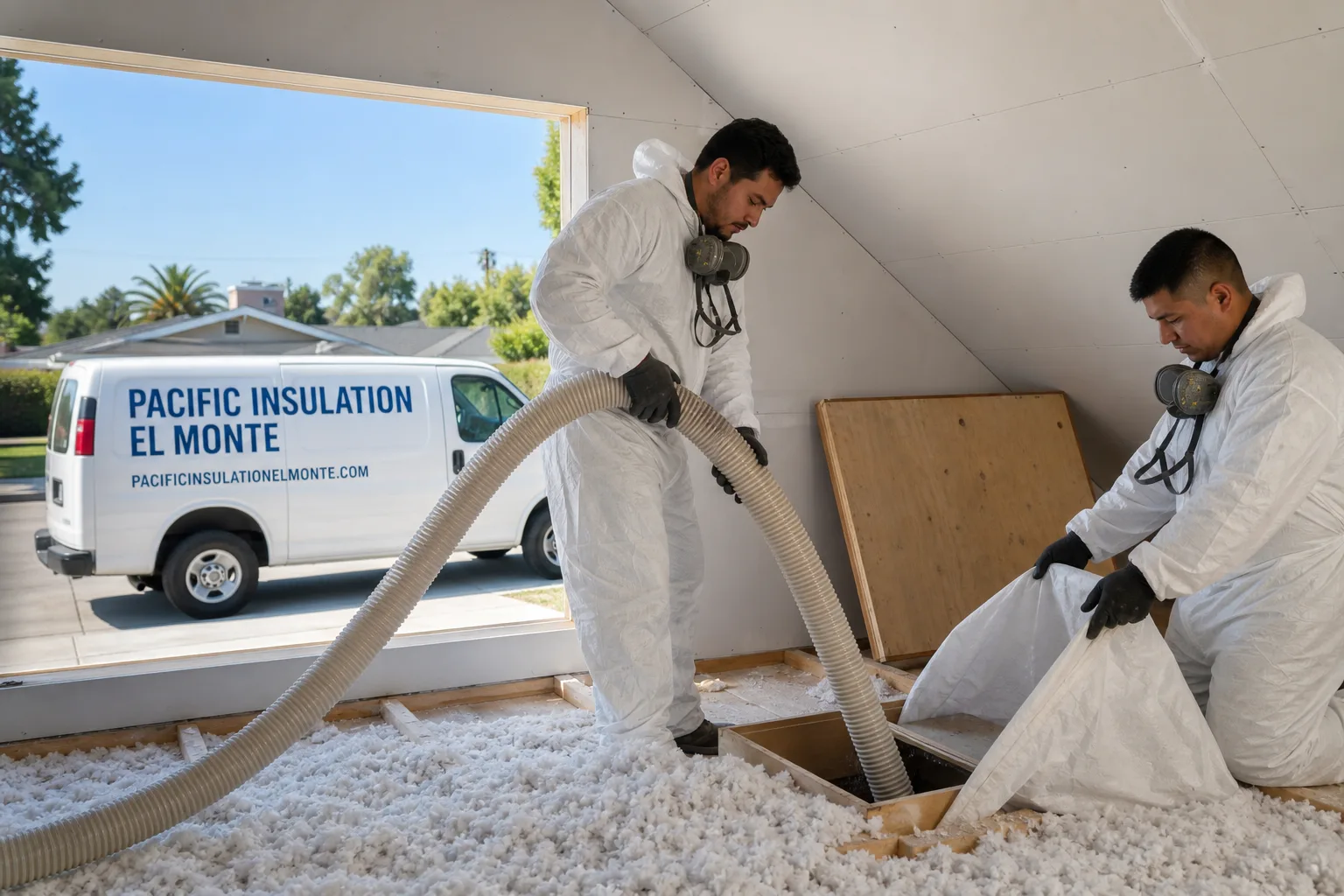
Fast, Reliable Crawl Space Encapsulation & Vapor Barrier Across Temple City
Crawl space encapsulation in Temple City usually runs $4,800–$9,500 for a typical 1,100–1,400 sq ft ranch home, and most jobs wrap up in one to two days. We’re Pacific Insulation El Monte, and the owner, Ruben Castillo, is the lead installer on every Temple City encapsulation we take on. No subcontractors, no handoffs. Call (626) 254-6177 for a free estimate and we’ll tell you exactly what your crawl space needs, not what we want to sell you.
Temple City’s 1950s and 1960s stucco ranches sit on raised foundations that create a specific set of moisture problems most general contractors don’t fully understand. We work in Temple City weekly, and we know what those vented crawl spaces do in August when the San Gabriel Valley hits 105°F. That’s not something you learn from a brochure.
Why Pacific Insulation El Monte Is Temple City’s Preferred Crawl Space Encapsulation & Vapor Barrier Company
Ruben Castillo owns the business and runs the crew himself. When you call us about encapsulation in Temple City, the person answering the phone is the same person who’ll be under your house with a staple gun and seam tape. That accountability changes how the work gets done. There’s no middleman to blame when something’s off, because Ruben’s name is on the job and his hands are in it.
We stock the materials Temple City homes actually need. That means 10-mil and 12-mil reinforced vapor barrier, closed-cell spray foam from Icynene and Demilec, and insulation from Owens Corning, Johns Manville, and Knauf. We don’t push one manufacturer because we’re locked into a supply contract. We match the material to your crawl space, your foundation type, and your moisture problem. Eight brands, one diagnostic approach.
Most Temple City calls we get come from homeowners who’ve lived in the same ranch house for 20 years and just discovered their floor joists have been sweating for a decade. We start every job with a full look at the crawl space and the thermal envelope above it. Your attic, walls, and crawl space work as one system, and we treat them that way. The Crawl Space Encapsulation & Vapor Barrier work we do sits inside that larger picture, not apart from it.
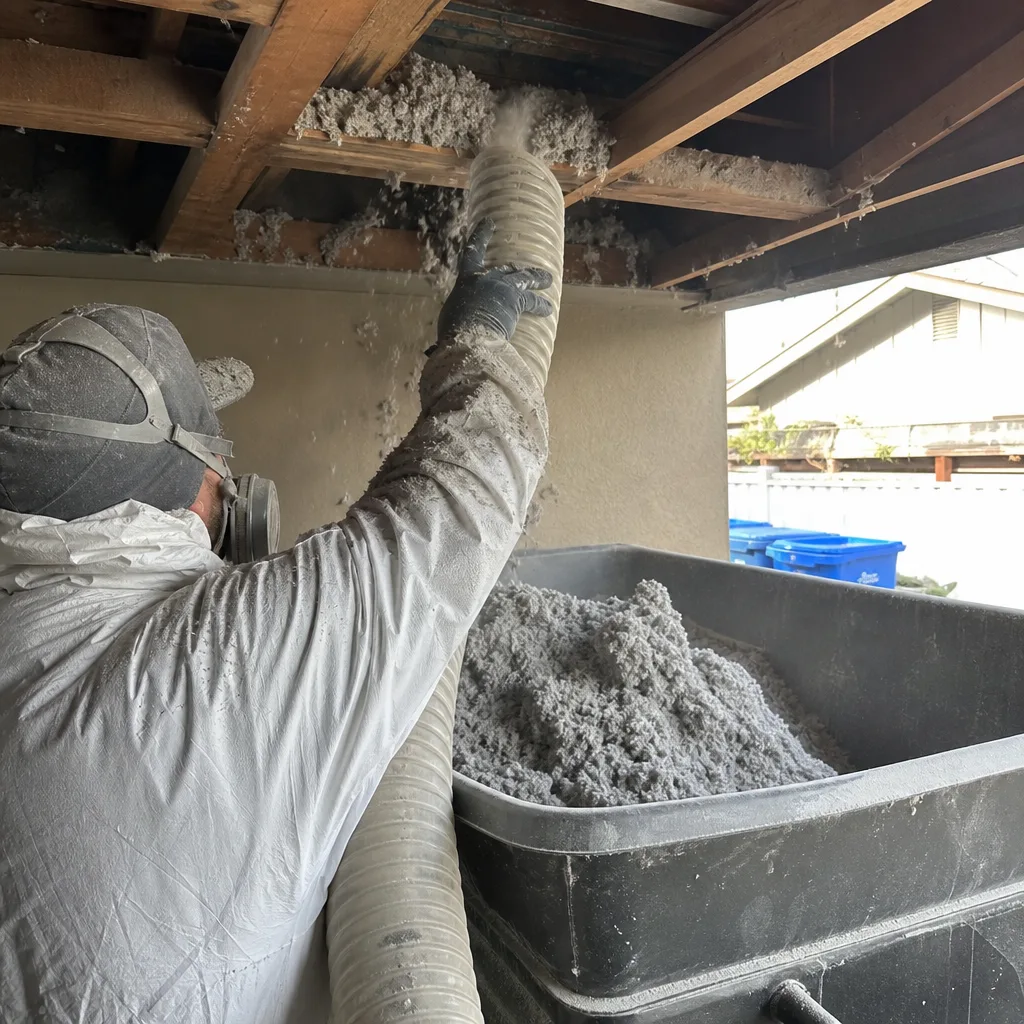
We also handle the prep work most insulation companies skip. Attic cleaning, Reflectix repair in Temple City, rodent proofing, air sealing. One crew handles everything from removal to installation. For Temple City property managers, that’s the difference between coordinating three vendors and making one phone call.
Our Crawl Space Encapsulation & Vapor Barrier Services in Temple City
Crawl Space Vapor Barrier
A vapor barrier in Temple City has to handle more than just ground moisture. The irrigated St. Augustine lawns that cover so many Temple City yards push water through foundation mortar all spring and summer. We install 10-mil reinforced barrier as our standard, with 12-mil for older foundations with rougher gravel or exposed aggregate. Seams get taped and overlapped, and the barrier runs up foundation walls far enough to keep wicking moisture from climbing behind it.
Crawl Space Encapsulation
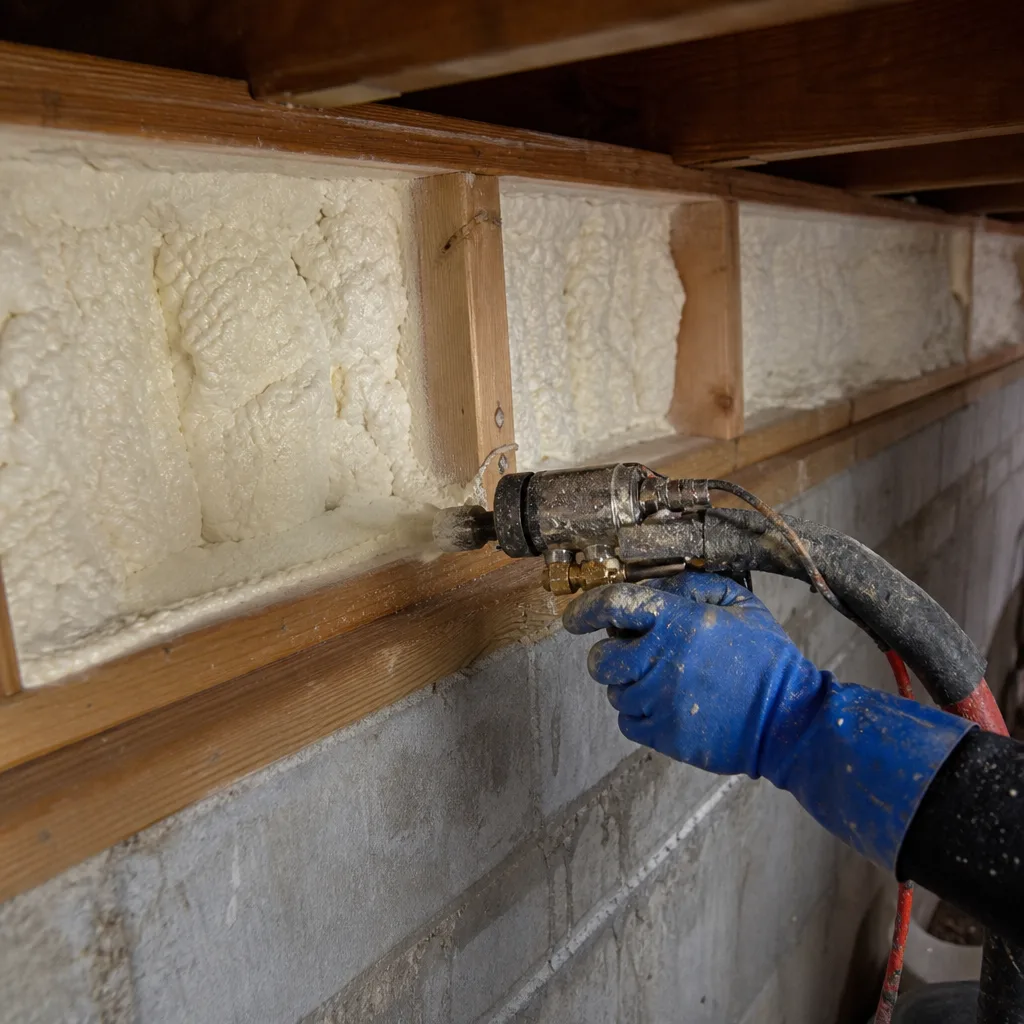
Full encapsulation means sealing the entire crawl space: vapor barrier over the dirt floor, closed-cell spray foam on perimeter walls, sealed foundation vents, and an access door that actually seals. In Temple City, where summer afternoons bake the crawl space to 120°F and then AC systems condense moisture on cooler surfaces at night, encapsulation is the only approach that stops the cycle instead of slowing it. We do this work in Temple City weekly, from homes near Live Oak Park to streets north of Las Tunas Drive.
Crawl Space Insulation
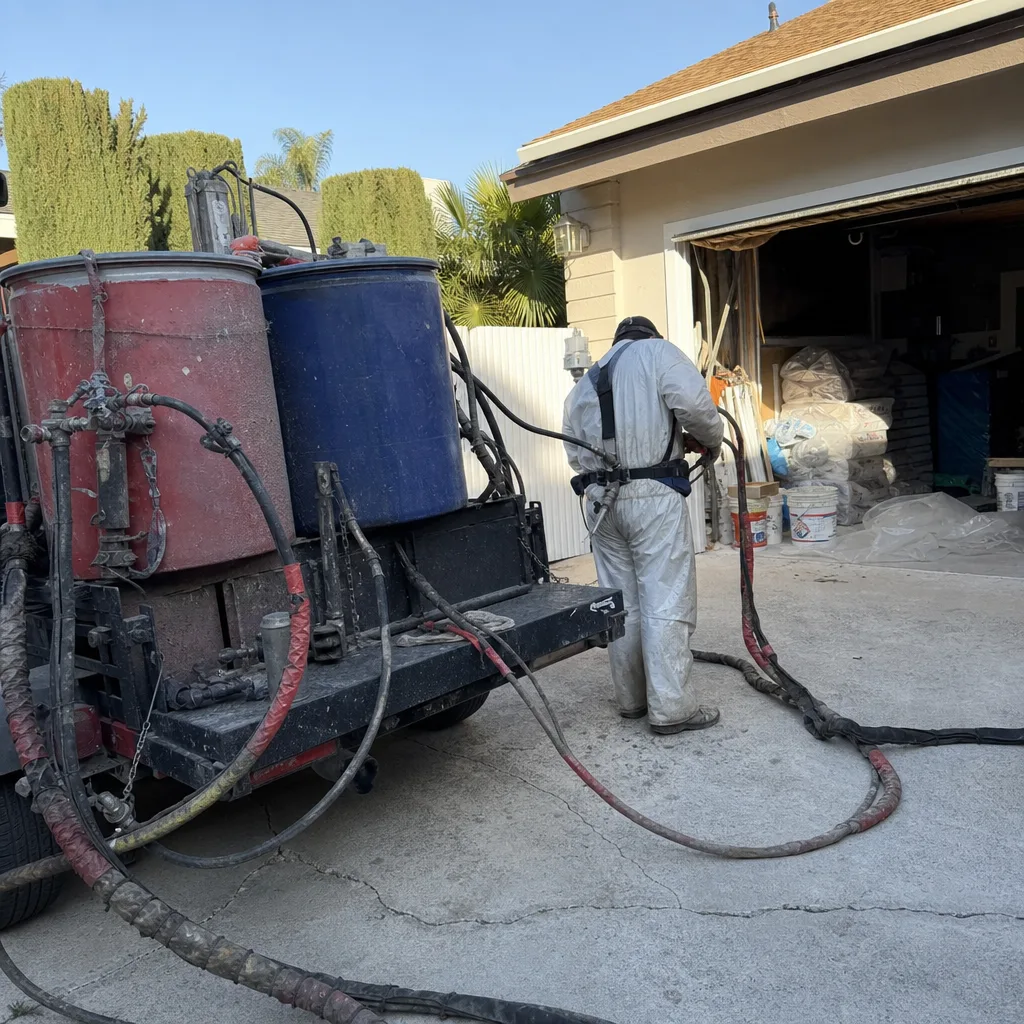
After the moisture problem is solved, insulation is what makes the crawl space stop heating your house. We use closed-cell spray foam from Icynene or Demilec on perimeter walls, or Rockwool stone wool where fire resistance matters. In Temple City’s aging ranch homes, the original fiberglass batts are often moldy and sagging. We remove and replace them as part of the encapsulation, not as a separate trip.
Crawl Space Moisture Control
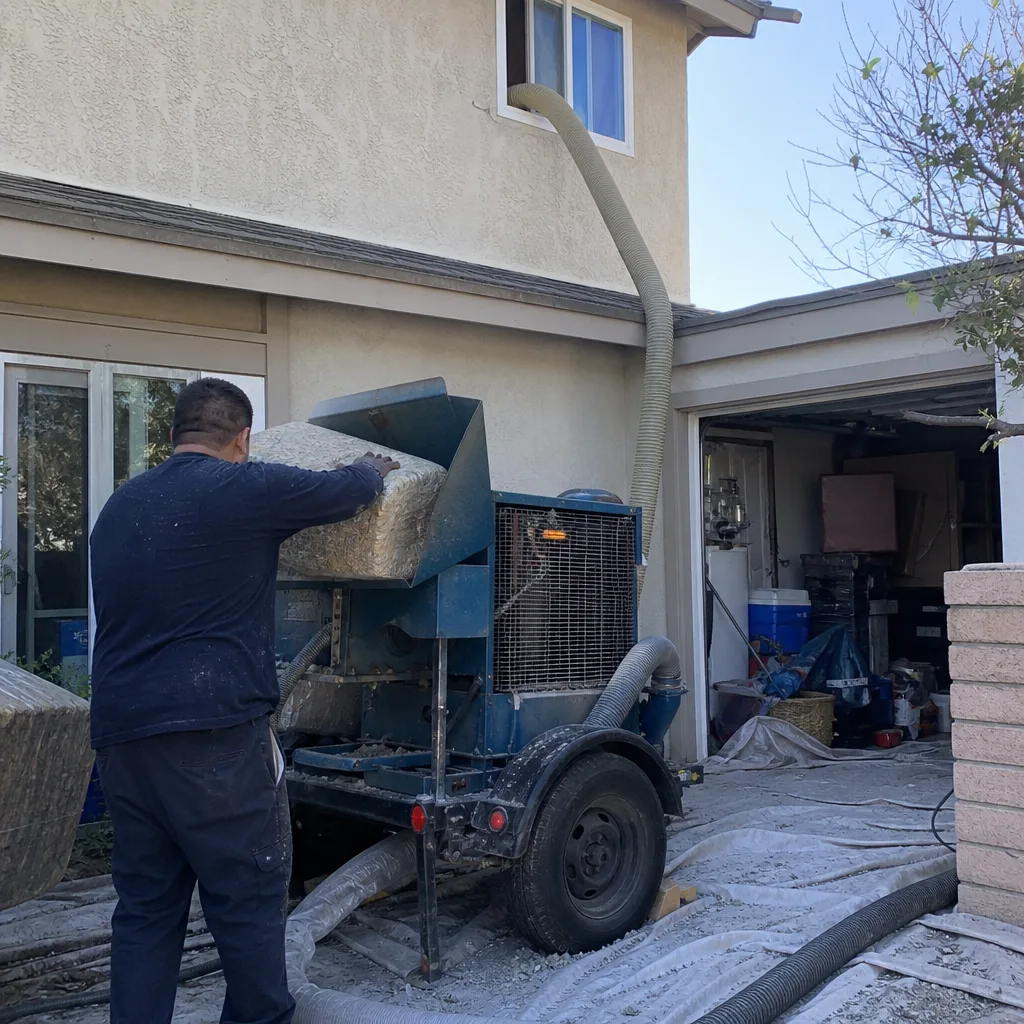
Moisture control in Temple City starts with understanding why the moisture is there. Over-irrigation, cracked clay sewer lines, foundation vent gaps, and the region’s lack of a marine layer all play a role. We diagnose the source before we seal anything. A vapor barrier laid over an active sewer leak just traps the moisture inside the barrier, and you’ll smell it in six months. We find the problem first.
What happens when you call
- 1
A real person answersNo phone trees — you reach a local pro.
- 2
You get an upfront price rangeHonest numbers before anyone is dispatched.
- 3
A background-checked tech heads outLicensed & insured, dispatched right away.
- 4
You approve before work beginsNothing starts until you say go.
Trusted Brands We Service in Temple City
We carry materials from Owens Corning, Johns Manville, Knauf, and Rockwool, plus spray foam lines from Icynene and Demilec. That breadth matters in Temple City, where your 1962 ranch foundation might need a different approach than the 1980s addition on the back. We source what fits the job, and we keep common Temple City stock on hand so we’re not waiting on a shipment from Fontana when your crawl space is already opened up. Ruben Castillo chooses every material that goes into your home, and he installs it himself.
Common Crawl Space Encapsulation & Vapor Barrier Problems We See in Temple City Homes
- Vapor barrier seam failure from irrigation moisture. Temple City’s dense St. Augustine lawns hold water against foundation walls, and that moisture saturates exposed vapor barrier edges. Tape seams peel, the barrier wrinkles, and moisture escapes around the edges. We lap and mechanically fasten seams in high-moisture zones instead of relying on tape alone.
- Condensation from the hot-cold cycle. During 105°F afternoons, superheated air infiltrates through vented crawl spaces. At night, when AC pulls the interior temperature down, that warm air condenses on ductwork and floor joists. Sealing foundation vents and insulating perimeter walls breaks this cycle entirely.
- Cracked clay sewer lines under the crawl space. Pre-1972 Temple City homes often still have original clay sewer lines. The valley’s expansive clay soil shifts with wet and dry seasons, cracking those lines and releasing moisture into the crawl space. A vapor barrier over an active leak fails fast. We check for this before encapsulation.
- Degraded original insulation acting as a moisture sponge. The fiberglass batts installed in 1950s and 1960s Temple City homes were never designed for the valley’s humidity swings. After decades, they hold moisture against floor joists and framing. We remove and replace them as part of the encapsulation, not as an afterthought.
Pricing for Crawl Space Encapsulation & Vapor Barrier in Temple City, CA
Here’s what Temple City homeowners can expect, based on the work we’ve done in the area:
- Vapor barrier only (10-mil reinforced): $1,800–$3,200 for a typical 1,100–1,400 sq ft crawl space.
- Vapor barrier with perimeter wall insulation: $3,500–$5,500 depending on foundation height and access.
- Full encapsulation (barrier, foam walls, sealed vents, sealed access door): $4,800–$9,500.
- Encapsulation with insulation removal and replacement: Add $1,200–$2,800 depending on how much degraded batting is present.
What moves the price in Temple City: crawl space height (older ranch homes often have 18–24 inches of clearance, which slows work), whether clay sewer lines need scoping first, and how much original insulation needs removal. Estimates are free, and Ruben walks the crawl space with you before quoting. Call (626) 254-6177 and we’ll schedule it.
We Also Serve Cities Near Temple City
We’re based in El Monte, six minutes from downtown Temple City, and we serve the whole San Gabriel Valley. That includes Temple City, El Monte, San Gabriel, Arcadia, and Rosemead. Same crew, same owner-led installation, same diagnostic-first approach. If you’re in any of these cities, call (626) 254-6177 and we’ll be there fast.
Serving Temple City, CA — Our Local Coverage Area
We’re based in the Temple City area and know this community well. Use the map below to see our service coverage — if you’re nearby, we can almost certainly help.
FAQs — Crawl Space Encapsulation & Vapor Barrier in Temple City
Central AC retrofitted in the 1980s and 1990s often added ductwork through the attic while leaving the crawl space unchanged. When that AC runs at night, it cools the floor assembly from above while the crawl space below is still holding 100°F+ air from the day’s heat. The temperature differential forces condensation onto the underside of the floor and any exposed framing. Non-AC homes never create that differential, so moisture accumulates more slowly. Encapsulation and sealed vents remove the hot-air source and stabilize the crawl space temperature, which stops the condensation cycle. Call (626) 254-6177 and we’ll inspect your crawl space before your next summer bill.
Usually yes. Older Temple City foundations have rougher gravel, uneven concrete, and sometimes exposed aggregate that tears standard 6-mil barrier during installation. We recommend 10-mil reinforced as the minimum for pre-1972 ranch homes, and 12-mil when the original foundation has significant surface irregularity. Thicker barrier also resists puncture from the rocks and debris that accumulate under older homes. Newer builds with smooth crawl space floors can often use 10-mil without an issue, but in Temple City’s older stock, the upgrade is worth it.
Coastal LA cities get a daily marine layer that keeps crawl spaces cooler and more stable. Temple City doesn’t. The San Gabriel Valley’s inland position means summer afternoons hit 100°F or more, and that heat drives into vented crawl spaces and sits there. Encapsulation in Temple City has to account for much larger temperature swings than the same work in Santa Monica or El Segundo. That means sealed vents, closed-cell foam on perimeter walls rather than just fiberglass, and a vapor barrier that holds up to repeated heat-and-cool cycles without seam failure.
Yes, and doing it separately costs more. In most Temple City ranch homes, the original fiberglass is either moldy, sagging, or both. Encapsulation seals the space first, and then insulation goes on top of that sealed environment. If you encapsulate but leave degraded batts in place, the moisture they’re already holding gets trapped. Pulling them during encapsulation is a one-trip job. Separating the work means a second mobilization, additional debris removal, and more disruption.
Not reliably. The musty smell in a Temple City crawl space usually comes from three sources: ground moisture, degraded insulation holding moisture, or a slow sewer line leak. A vapor barrier addresses the first source. If the insulation is moldy or a clay sewer line is cracked, the smell persists even with barrier down. We diagnose the source before installing anything, which is why our estimates are free but thorough. Call (626) 254-6177 and Ruben will tell you what’s actually causing the smell.
What Makes Temple City Different: Pre-Code Ranches, Inland Heat, and Irrigated Yards
Temple City’s housing stock is dominated by single-family stucco-over-wood-frame ranch homes built between roughly 1945 and 1972, almost all predating California’s mandatory insulation requirements. These homes sit on raised foundations with vented crawl spaces that bake in the San Gabriel Valley’s 100°F+ summer heat. At the same time, Temple City’s dense, irrigated lawns drive ground moisture through porous foundation mortar all summer long. The result is a uniquely aggressive vapor-drive cycle: superheated air enters the crawl space during the day, and irrigation moisture wicks through foundation walls at night. Encapsulation with a sealed vapor barrier is more effective in Temple City than in coastal cities because the moisture load is higher and the temperature swing is wider.
We saw this firsthand on a job in Temple City on Golden West Avenue. The homeowner called us about a persistent musty smell that three other companies couldn’t solve. Ruben Castillo went under the house and found a 1,200 sq ft crawl space with loose R-11 fiberglass batts and no vapor barrier anywhere. The insulation was moldy from years of irrigation moisture wicking through the foundation, and the exposed dirt floor was releasing moisture into the space every afternoon. Our crew removed the moldy fiberglass, sealed the foundation vents, installed a 10-mil reinforced vapor barrier over the entire dirt floor, and added closed-cell spray foam on the perimeter walls. Within 48 hours, the relative humidity in that crawl space dropped below 50%. The smell was gone in three days. That’s the difference between a targeted diagnosis and a generic quote.
If you own a Temple City ranch home built before 1972, your crawl space was designed for a climate and a water-use pattern that no longer exists. We understand that. We work in Temple City every week, and we’re not going to sell you a solution that doesn’t match what’s under your house.
Call (626) 254-6177 for a free crawl space inspection and estimate. Ruben Castillo will walk the space with you, show you what’s happening, and give you a straight answer on what it costs to fix.
Written by Ruben Castillo, Owner at Pacific Insulation El Monte, serving Temple City and the San Gabriel Valley.