
Last updated September 16, 2026
How to Hire a Insulation Contractor in El Monte: A Step-by-Step Guide
Ask any insulation contractor in El Monte one question before signing anything: “Will the person who gave me this quote be in my attic on installation day?” Most can’t say yes, and that answer tells you everything about who’s actually responsible for the outcome. The insulation industry runs on a split-brain model where the estimator sells a job and then hands it to a crew the homeowner has never met. This guide walks through how to hire for accountability, what a real bid should look like, and which questions separate a diagnostician from someone just working through a pitch script in El Monte’s older housing stock.
Quick Answer
To hire an insulation contractor in El Monte, verify the business holds a current California C-2 Insulation and Acoustical contractor license on the CSLB database, require a written bid that names the material manufacturer and installed R-value, and ask directly whether the person quoting the job will also perform the installation. Pay no more than 10% upfront, and choose a contractor who starts with a home energy audit rather than a product pitch.
Table of Contents
- Step 1: Verify the C-2 License on the CSLB Database
- Step 2: Read the Bid Like a Homeowner Who Knows Better
- Step 3: Ask Questions That Separate Diagnosticians from Salespeople
- Step 4: Understand What Your El Monte Home Actually Needs
- Step 5: Structure Payment Terms That Keep Incentives Aligned
- Step 6: Spot the Red Flags in El Monte’s Contractor Market
- Common Mistakes to Avoid
- When to Call a Professional
- Frequently Asked Questions
- The Bottom Line
Step 1: Verify the C-2 License on the CSLB Database
In California, insulation installation falls under the C-2 Insulation and Acoustical Contractor classification. A general building contractor (B license) can technically pull permits for insulation work, but a C-2 holder has demonstrated specific competency in thermal and acoustic materials. This matters in El Monte because many homes built between the 1940s and 1970s have framing, wiring, and ventilation quirks that a generalist may not recognize as thermal problems until the work is done wrong.
Here’s the two-minute verification process:
- Go to the Contractors State License Board (CSLB) website and click “Check a License.”
- Enter the business name or license number from the contractor’s card or truck door.
- Confirm the license status reads “Active” and the classification includes C-2 or B.
- Check the “Workers’ Comp” field. If it says “Exempt” and the contractor brings a helper, that’s a red flag. Any employee on your property must be covered.
- Scroll to “Bonding” and verify the contractor’s bond is current. If the bond is expired, the license is technically suspended even if the status line hasn’t updated.
We’ve seen homeowners in El Monte skip this step because the contractor seemed professional in person. A clean truck and a polished estimate mean nothing if the CSLB record shows a suspended license with an active complaint. The database takes under two minutes to check, and it’s the single highest-leverage action you can take before signing anything.
If the contractor is based outside El Monte but works here regularly, that’s fine. The license is statewide. What matters is whether they pull El Monte city permits when required. Insulation retrofits don’t always need a city permit, but if your project includes structural work or electrical changes around recessed lighting, ask the contractor whether they’ll handle permits or whether you’re expected to. For background on the regulatory side, see our guide to Insulation Permits, Codes & Inspections in CA: What You Need to Know. A contractor who says “don’t worry about permits” on a job that clearly needs one is telling you something about how they handle the parts of the job you can’t see.
Step 2: Read the Bid Like a Homeowner Who Knows Better
Most insulation bids in El Monte are vague in four specific places, and each vagueness protects the installer while creating risk for you. Here’s what to look for:
- R-value. The bid should state the installed R-value as a settled number, not a pre-installation number. Blown-in fiberglass settles after installation. If the bid says “R-38 loose fill,” ask whether that’s the settled R-value or the fluffed-up number right out of the hopper. In El Monte’s climate (hot summers, mild winters), attic insulation matters more for air conditioning load than heating load. An R-38 attic that settles to R-25 by August is underperforming exactly when you need it most.
- Material brand. “Blown insulation” is not a specification. The bid should name the manufacturer: Owens Corning, Johns Manville, Knauf, GreenFiber, or whoever it is. Different manufacturers produce different densities and settling characteristics. If the bid doesn’t name the brand, the contractor is reserving the right to use whatever is cheapest on truck day.
- Coverage depth. R-value and depth are related but not interchangeable. A bid that says “R-38” without specifying the bag count or the installed depth in inches leaves room for the crew to under-fill. Good bids specify bags per thousand square feet and target depth in inches. Ask for both numbers.
- Waste calculation. Some contractors calculate material based on the attic’s square footage and call it done. Others factor in waste from over-spray, obstacles like ductwork and trusses, and the practical reality that attics aren’t perfect rectangles. A bid that looks 15% lower than a competitor’s may simply be under-calculating material. Ask how the waste factor was computed. If the answer is a blank stare, the contractor hasn’t actually thought about your attic.
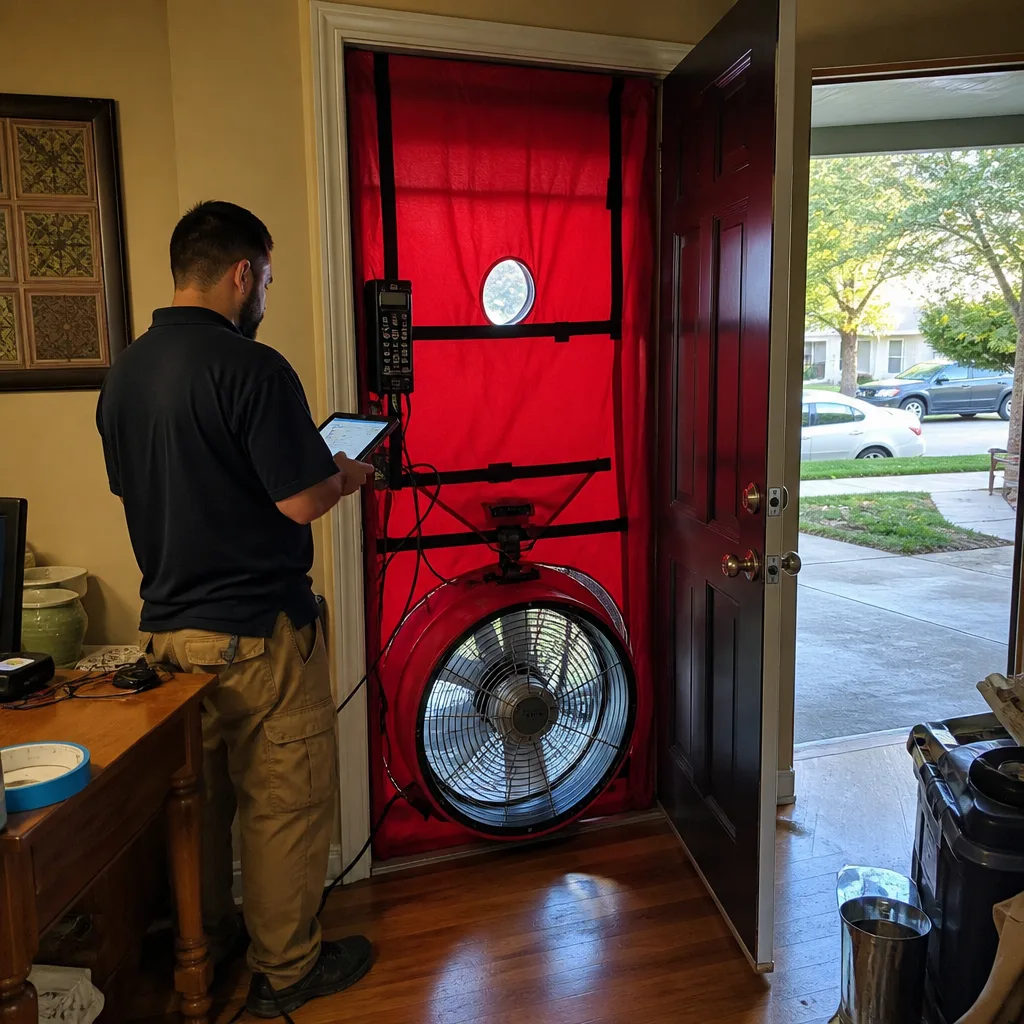
We start every insulation project in El Monte the same way: with an energy audit that tells us where conditioned air is actually leaving the house. The bid then reflects that diagnosis, not a generic square-footage formula. When the material brand, settled R-value, depth, and waste calculation are all written down, you can compare bids apples-to-apples instead of guessing.
Step 3: Ask Questions That Separate Diagnosticians from Salespeople
Here’s a conversation test. Call a contractor about attic insulation. Then, mid-conversation, ask: “While you’re up there, should I do anything about my crawl space?” A salesperson will say “Sure, we can quote that too” and move on. A diagnostician will stop and ask about your floor temperature in winter, whether you’ve seen moisture on the crawl space dirt, whether your hardwood feels cold in January. They know the house works as a system, and they can’t answer a crawl space question without knowing how your home behaves.
Good questions to ask during the estimate visit:
- “What did you see in my attic that would change your recommendation if my budget were 30% smaller?” This forces the contractor to prioritize. A good one will tell you air sealing matters more than adding R-value if you have gaps around recessed lights and plumbing chases. A salesperson will stick to the full-scope pitch.
- “What’s the payback period for this specific job in my house?” A real contractor will hesitate, ask about your AC usage, and give you a range with assumptions. A salesperson will say “most customers see savings immediately.” That’s not math.
- “Who installs the material if you’re not available?” If the answer is “my crew” and you haven’t met them, ask to meet them before signing. If the answer is “I do,” you’ve found an owner-operator who can’t hand off accountability.
- “What would you NOT do in my house?” This is the inverse of an upsell. A contractor who tells you “your walls are fine, don’t touch them” is giving you information that costs them money. That’s the person you want in your attic.
- “How do you handle the transition between my attic and the exterior walls?” If they say “that’s a different job,” they treat the envelope as isolated pieces. If they talk about bypasses, top plates, and the stack effect, they think in systems.
In our experience, the contractors who give the most useful answers in El Monte are the ones who install the material themselves. The owner is the lead installer on every job we do, whether it’s attic insulation in El Monte or a full crawl space encapsulation. That means the person answering your questions during the estimate is the same person holding the hose on installation day. There’s no telephone game between sales and installation.
Step 4: Understand What Your El Monte Home Actually Needs
El Monte sits in the San Gabriel Valley where summer temperatures regularly push into the 90s and occasionally past 100. Winter lows rarely dip below 40. That means your insulation priorities are inverted from what a national contractor might assume: you’re insulating primarily against heat gain, not heat loss. Attic temperatures in El Monte can reach 140°F on an August afternoon. That heat radiates down through your ceiling and forces your AC to work harder than it should.
The homes here matter too. Much of El Monte’s housing stock was built between the 1950s and 1970s, before California’s Title 24 energy standards existed. Many of these homes have:
- Original blown-in insulation that has settled to half its original R-value in the attic.
- No insulation in the exterior walls at all, or fiberglass batts that have slumped and left gaps at the top of each stud bay.
- Crawl spaces with bare dirt floors that pull moisture and hot air into the living space.
- Attic access hatches that have never been weatherstripped or insulated.
If you own one of these homes, the right insulation scope isn’t a single product. It’s usually a combination: air sealing the attic floor first (because insulation doesn’t stop air movement, it only slows conductive heat transfer), then adding blown-in fiberglass or cellulose to reach R-38 or R-44, then addressing the crawl space if floor temperatures are inconsistent. A radiant barrier can help on west-facing roof slopes that take direct afternoon sun.
This is where the whole-envelope approach matters. Your attic, walls, and crawl space work as one connected system. Air moves between them constantly. If you upgrade the attic but leave an unsealed crawl space, you’ll wonder why your floors are still cold and your energy bills barely moved. If you insulate the walls but skip the attic, you’ll redo the walls in five years because the thermal problems migrated.
Spray foam insulation in El Monte has a specific role in this climate. Closed-cell foam like Icynene or Demilec products does two jobs at once: it insulates and air-seals in a single pass. That’s valuable in older El Monte attics with complicated framing, recessed light cans, and ductwork that makes batt installation clumsy and loose-fill prone to gaps. The tradeoff is cost. Spray foam runs roughly two to three times the price of blown-in fiberglass per square foot. It’s not the right answer for every home, and a contractor who wants you to spray-foam everything without discussing alternatives is selling product, not solving problems.
Step 5: Structure Payment Terms That Keep Incentives Aligned
California law caps the down payment for home improvement contracts at 10% of the total job price or $1,000, whichever is less. Any contractor asking for more than that before work begins is either unaware of the law or hoping you are. Either way, that’s not someone you want in your attic.
Beyond the legal cap, structure the remaining payments around milestones you can verify:
- 10% at signing. This covers scheduling and material ordering. Under California law, this is the maximum legal down payment.
- 40% when materials arrive at your property. You should see the bags or bales with the manufacturer’s name printed on them. If the bid says Owens Corning and the truck unloads something else, stop and ask before anything gets installed.
- 40% when the installation is complete but before the final walkthrough. At this point, you should be able to see the installed depth in the attic and the contractor should have walked you through what was done.
- 10% after you’ve inspected the work and the contractor has addressed any concerns. This is your quality holdback. A contractor who objects to a 10% holdback for final inspection is telling you they don’t expect you to inspect.
Never pay in cash. Never wire money to a personal account. A legitimate licensed contractor in El Monte has a business account and a paper trail. The CSLB recommends paying by check or credit card so there’s a record. If a contractor offers a discount for cash and it’s meaningful (more than 3-4%), that’s a red flag about whether the work is being reported properly.
One more thing: get everything in writing. Every change to the scope, every material substitution, every delay. In California, the written contract is what governs if something goes wrong. A verbal promise about “we’ll seal all the penetrations too” is worthless if it isn’t on the bid or the contract.
Step 6: Spot the Red Flags in El Monte’s Contractor Market
El Monte has an active contractor market, which means homeowners here see the full spectrum of operators. Some specific patterns we’ve observed:
Post-storm door knockers. After a heavy rain or a heat wave, unlicensed operators sometimes work neighborhoods door to door offering “attic inspections” that “find” problems. Legitimate insulation contractors don’t need a storm to tell you your attic insulation is inadequate. They can tell from your energy bills and the age of your home. If someone knocks on your door unsolicited and finds a “serious problem” within ten minutes, thank them and close the door.
Vague material specs. “Blown insulation” with no manufacturer, no R-value, no depth, and no bag count is not a bid. It’s a placeholder. In El Monte’s housing stock, where original insulation from the 1960s has settled to near nothing, the difference between a properly specified R-38 job and a vaguely specified “insulation upgrade” is thousands of dollars in energy costs over the life of the material. A bid that doesn’t name the manufacturer (Knauf, Johns Manville, GreenFiber, or another brand) is protecting the installer’s ability to buy cheap on install day.
Subcontractor handoffs. The estimator who sold you the job and the crew who shows up are different people. This is the single most common disappointment pattern we hear about from El Monte homeowners. The estimator promised careful air sealing and precise coverage. The crew was paid by the square foot and moved fast. When you ask about the gaps you saw in the photos, the estimator blames the crew and the crew blames the estimator. Nobody owns the outcome. Ask before signing: “Will you personally be installing this job?” If the answer is no, ask who will, and ask to meet them.
The “free inspection” that’s actually a sales appointment. Free inspections are fine. We offer them. The red flag is when the “inspection” consists of the contractor poking their head in the attic, taking a photo on their phone, and then spending 45 minutes at your kitchen table walking through financing options. A real inspection involves temperature readings, looking at the condition of existing insulation, checking for moisture, examining the air sealing around penetrations, and measuring the actual depth of what’s there. If the inspection took less time than the sales pitch, you didn’t get an inspection.
Common Mistakes to Avoid
- Choosing the lowest bid without comparing specs. A $3,800 bid for “attic insulation” and a $5,200 bid for “R-44 settled GreenFiber with air sealing and 2 inches of closed-cell on the top plates” are not the same job. Compare line items, not totals. The lowest bid often wins by under-calculating material or skipping air sealing entirely.
- Skipping the energy audit. In our experience, homeowners who skip the audit and go straight to insulation spend more money for less comfort. The audit tells you where the air is actually moving. Insulation without air sealing is like caulking a window that’s open.
- Assuming newer homes don’t need insulation work. A home built in El Monte in 1995 may already have R-30 attic insulation that’s holding up fine. But that same home may have fiberglass batts in the walls that were installed quickly during a construction boom and have slumped or left gaps. Newer doesn’t mean efficient.
- Not asking about the attic access hatch. The hatch is the most-overlooked thermal hole in the house. An uninsulated hatch in an otherwise R-38 attic is a thermal short circuit. Ask whether the bid includes weatherstripping and insulating the hatch. If it doesn’t, ask why.
- Ignoring the crawl space because “the attic is the priority.” In El Monte’s older homes, crawl space moisture migrates up through the floor and increases the humidity load on your AC. If you’re doing insulation work anyway, at least ask the contractor to look at the crawl space and tell you what they see.
- Paying the full amount before the work is done. The 10% cap exists for a reason. If the contractor finishes and the work looks incomplete, the final payment is your leverage. Once you’ve paid in full, your leverage is gone.
- Assuming licensing means quality. The C-2 license proves the contractor is legal. It doesn’t prove they install carefully. Licensing is a floor, not a ceiling. The quality signal is whether the contractor can answer specific questions about your house, not whether they have a clean CSLB record.
When to Call a Professional
Insulation work isn’t a DIY project, and some situations are urgent enough that they warrant a phone call today. If you’ve noticed your AC running constantly in July and August without getting the house below 78, that’s a sign your attic insulation has failed or settled below functional levels. If you see daylight coming through gaps around recessed light cans in the ceiling, you have air leaks that no amount of added insulation will fix on its own. If you smell musty air or notice inconsistent floor temperatures between rooms, your crawl space is likely part of the problem. Blown-in insulation in El Monte work involves hoses, hoppers, and coverage math that’s hard to get right without training, and the material settles differently depending on brand and density. Pacific Insulation El Monte offers free estimates in El Monte. Call (626) 254-6177 and describe what you’re seeing. We’ll tell you whether it’s worth a visit.
Frequently Asked Questions
Attic insulation in El Monte typically runs $2,800 to $6,500 for a standard 1,200 to 2,000 square foot home, depending on material (blown-in fiberglass or cellulose at the lower end, spray foam at the higher end), the target R-value, and whether air sealing is included. For a detailed look at pricing factors, see our Insulation Cost Breakdown: The El Monte Homeowner’s Reference for 2026. Crawl space encapsulation is typically $3,000 to $8,000 depending on square footage and access. Wall insulation retrofits vary widely based on the home’s construction. Call (626) 254-6177 for a specific quote for your home.
In most El Monte homes built before 1980, full replacement is cheaper per R-value than trying to repair or top off settled insulation. The old material has usually compressed to a fraction of its original thickness and may be contaminated with rodent droppings or moisture. Pulling it out and starting fresh with a known R-value is usually the better long-term decision. A home energy audit will tell you whether your existing insulation is salvageable.
Most attic insulation jobs in El Monte are completed in one day, including removal of old material if needed, air sealing, and installation of new insulation. Larger jobs with crawl space work or wall injection may take two to three days. The owner-operated model we use means the job doesn’t get passed between an estimator and a crew, which keeps scheduling tighter.
Most insulation retrofits don’t require a city permit in El Monte. However, if your project includes structural changes, new electrical work around recessed lighting, or significant changes to the building envelope that affect ventilation, a permit may be required. Ask your contractor to confirm whether permits are needed before work begins. A licensed contractor will know the answer and handle it correctly.
For El Monte’s climate, the Department of Energy recommends R-30 to R-60 for attics, with R-38 being the practical sweet spot for most homes. If your attic currently has R-19 (common in 1960s and 1970s construction), upgrading to R-38 settled will cut cooling costs noticeably during August and September. Homes with ductwork in the attic benefit from being at the higher end of the range.
We typically schedule estimates within a few days and can often complete installation within a week, depending on material availability and the size of the job. Same-day installation is possible for straightforward attic jobs if the schedule allows, but a proper home energy audit takes time and shouldn’t be skipped just to hit a same-day target. Call (626) 254-6177 and we’ll give you an honest timeline.
The Bottom Line
Hiring an insulation contractor in El Monte comes down to one principle: the person quoting the job should be the person doing the job. When that accountability exists, everything else follows. Verify the C-2 license on the CSLB database. Read the bid for material brand, settled R-value, coverage depth, and waste calculation. Ask questions that force the contractor to think about your whole house, not just the attic. Cap your down payment at 10% and hold back final payment until you’ve inspected. Start with a home energy audit, not a product pitch. Do those things and you’ll get insulation that actually performs in August, not just material that fills a void. If you want to skip straight to the accountable option, Pacific Insulation El Monte starts every job with a home energy audit and finishes with the owner standing in your attic. Call (626) 254-6177 for a free estimate.
Written by the team at Pacific Insulation El Monte, serving El Monte since 2016. Browse our more guides & resources for additional homeowner guidance.